Waiving Jaden Ivey wasn’t a victory for inclusion. It was a lesson in athlete expendability
Former athletes like me know that in professional sports you can get away with most things … as long as you’re talented enough
April 1, 2026 · 3 min read
Waiving Jaden Ivey wasn’t a victory for inclusion. It was a lesson in athlete expendability
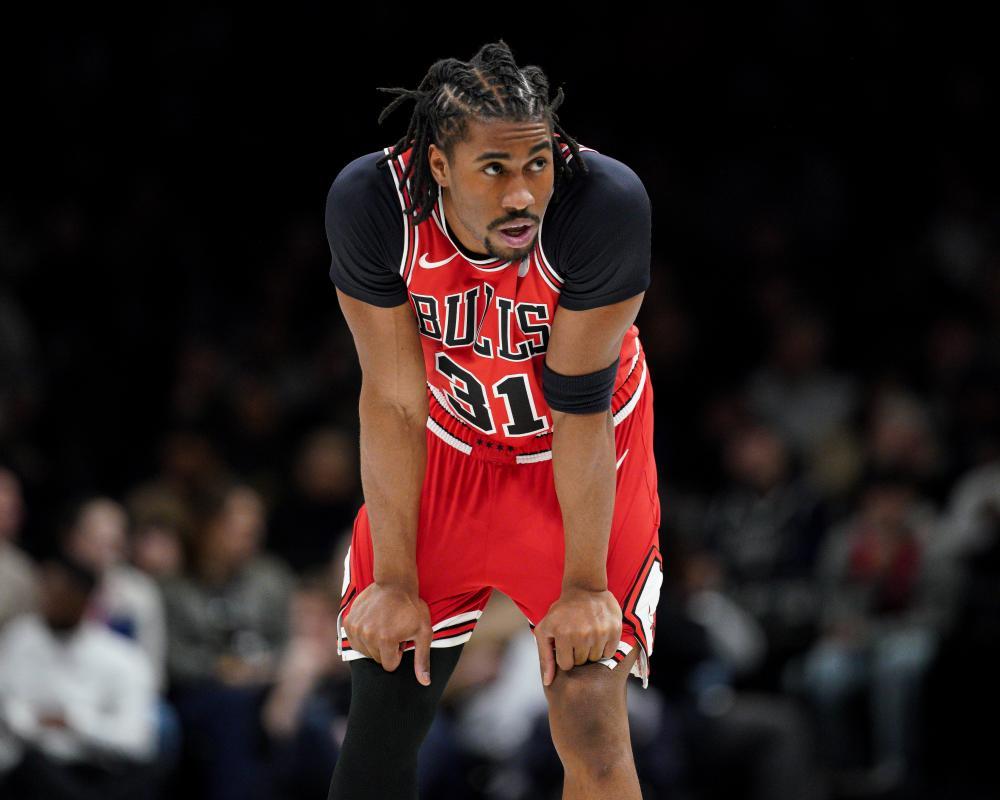
When the Chicago Bulls waived Jaden Ivey on Monday, after he made a series of unprompted anti-LGBTQ and religiously charged comments on social media, the move was framed as a response to “conduct detrimental to the team.” On the surface, the situation appears straightforward: a player said something controversial, and the organization acted.
But there’s a version of this story where Ivey is still in the league. Where he and his publicist create a swift and thoughtful apology, where his overnight inclusion education uses all the key buzzwords to prove his newfound allyship, maybe he pays a fine or makes a small donation, and he’s able to go back on to the court and live out his dreams in the NBA, a league which has been pro-LGBTQ+ for more than a decade. Ivey’s words exposed his beliefs. What followed revealed a lot about NBA teams: not just their stance on inclusion, but how they decide which voices are worth protecting and which are easy to remove.
Related: ‘The strongest fear I had ever felt’: RK Russell on coming out in the male world of football
As a former NFL player, I can tell you that locker room talk doesn’t often venture to either queer acceptance or religious beliefs. If religion is discussed, it’s individuals talking about what their faith has done for their life, turning young men into family patriarchs, helping individuals focus on their communities, and making people think about how they contribute to the world outside their sporting prowess. I can attribute that willingness to talk to the safety, vulnerability, and openness that a healthy locker room brings.
Having said that, Ivey’s comments weren’t a surprise to me. Honestly, if he had expressed his ideas on Pride Month in the average locker room many of his teammates would agree with him. I was the NFL’s first openly bisexual player and I’ve been on teams with plenty of players who hold the same views as Ivey, just as I have no doubt he’s been on teams with players like me, whether they are public about their identity or not.
I’ve heard plenty of ignorant comments in the locker room but it was through peer conversation arising from those moments – and seeing diverse points of view and life experiences – that I was able to grow and learn; I’m sure the same can be said for many of my teammates. Don’t get me wrong: even conversations among trusted teammates can devolve. I can recall homophobic jokes, speculation about players’ sexuality and misogynistic language. But the unspoken rule is that what happens in the locker room, for the most part, stays in the locker room and is to be worked out between teammates. What made Ivey’s comments different wasn’t the message but the fact that they were made outside the locker room.
There’s also the brutal truth that his swift release was no doubt a direct result of his lack of star power. When, like Ivey, you’ve had a short career riddled with injury and unremarkable performances, teams won’t protect you; they’ll burn you as a liability. There are plenty of examples of players saying things equal to or worse than Ivey and suffering few consequences. The difference is that they were superstars.
When Anthony Edwards, one of the best young players in the NBA, posted an Instagram story in which he called a group of men “queer-ass” before adding: “Look at the world I came to”, he was given the time to apologize. When players such as Rajon Rondo or even the late, great Kobe Bryant used homophobic slurs on the court they issued apologies and were fined by the league. The chances of any of them being cut for their language were infinitesimal. NBA championships and All-Star appearances may not excuse a player’s behavior but they provide him with time to course correct. The NBA has been publicly supportive of the LGBTQ+ community but business decisions are rarely made on moral values alone. The league does not police its players’ beliefs, only how their image affects the NBA’s bottom line.
What happened to Ivey doesn’t prove the NBA has solved homophobia in the locker room – not that it could anyway. It proves the league’s teams know how to respond when something becomes visible, and when the player involved is expendable enough to be made an example of.
The culture inside locker rooms won’t shift because one voice is removed, especially when the beliefs behind that voice were never isolated to begin with. The NBA does not eliminate these tensions. It manages them. And in a league where a player’s value shapes consequence, moments like this don’t show progress as much as they reveal the gap between what is said publicly and what is lived privately. Until that gap closes, these incidents won’t disappear. They’ll just keep finding new ways to surface.
Read Next