UK looks to relax planning rules for factory farms after industry lobbying
Exclusive: documents chronicle years-long campaign to make it easier to build intensive livestock units
April 2, 2026 · 3 min read
UK looks to relax planning rules for factory farms after industry lobbying
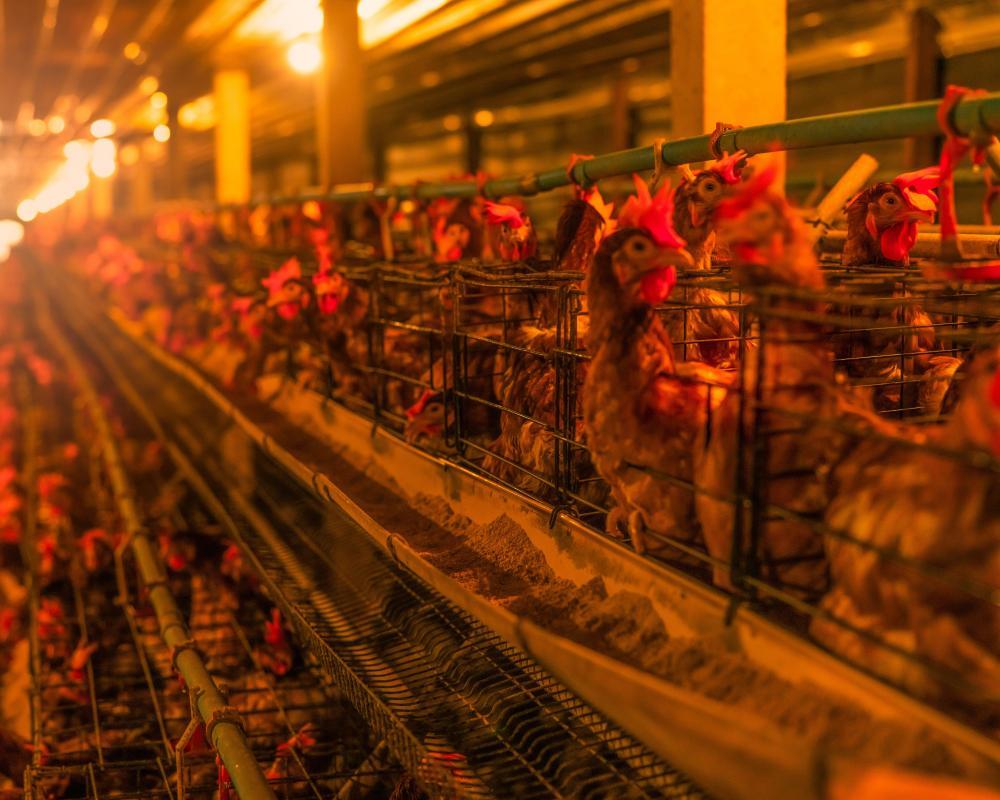
Ministers are rewriting planning rules to make it easier to build intensive livestock farms despite concerns about water pollution, air quality and local opposition.
Documents obtained by the Guardian under the Freedom of Information Act show that proposed changes to the national planning policy framework (NPPF) were discussed by ministers and officials in response to concerns of the country’s leading chicken producers, who have been lobbying on the issue for at least two years.
The British Poultry Council (BPC), which represents the sector, told the farming minister Angela Eagle last autumn: “Access to more growing space is the number one priority for the poultry meat sector.”
In its submission to the government’s farm profitability review last summer, it said: “The need for a solution – either through planning reform or land-use policy – and the urgency of that need dwarfs all other issues currently facing us.”
Related: Nigel Farage’s farming adviser calls for wheat prices to double
Before a poultry industry roundtable with Eagle in January, the BPC said it needed the government to “develop national planning direction and oversight for food production […] to safeguard the UK’s long-term food security”.
At the meeting, Eagle said: “We have also announced proposals to reform the planning system to more quickly unlock food and farming infrastructure. Planning should enable ambition, not stifle it.”
Her briefing notes directly linked the proposed changes to industry lobbying, describing planning reform as one of the industry’s “biggest asks” and saying her department and the Ministry of Housing, Communities and Local Government had been working to “find solutions to planning barriers to poultry sheds and other infrastructure necessary for food production”.
The draft NPPF includes several measures that could make it easier to approve new intensive livestock developments, including a higher bar for refusing applications on environmental grounds, less scope for local authorities to adopt tougher rules, greater weight to “domestic food production” and a new emphasis on “better accommodation for livestock”.
The industry says it needs more space to house chickens due to voluntary commitments to lower stocking density. Critics say these welfare commitments are voluntary and planning conditions do not guarantee lower stocking densities will be maintained over the long term. Last month, several restaurant chains withdrew from the Better Chicken Commitment over its call to end the use of fast-growing birds.
Richard Griffiths, the chief executive of the British Poultry Council, said planning reforms were needed to accommodate welfare improvements rather than to expand production.
“Over the last year or so we have seen the biggest welfare-focused change in the industry in this generation, with a voluntary reduction in stocking density from 38kg to 30kg per square metre,” he said.
“This requires additional space to simply bring us back – in bird numbers – to where we were previously. This discussion is not about expansion of production.”
He added the sector had to balance welfare with environmental impact and food security, saying that failing to support domestic production could lead to more imports. The BPC has also called for food production to be considered “critical national infrastructure”.
But Prof Paul Behrens, an expert in food systems at the University of Oxford, said the food security case for intensive poultry was “illusory” because the sector “depends on imports for feed and vitamins, while making us more vulnerable to disease outbreaks like avian flu”.
The poultry sector’s planning difficulties are largely driven by organised opposition, including local people, who often raise concerns over water pollution, air quality and the climate crisis.
Agriculture is the leading cause of water pollution in the UK. The Environment Agency estimated last year that it accounts for 70% of nitrate pollution and 25-30% of phosphorus pollution. Runoff from intensive poultry units is one contributor to that wider pollution burden.
Last year councillors in Norfolk rejected plans by the food producer Cranswick to build what would have been one of Europe’s biggest chicken farms, which would have housed nearly 900,000 birds at a time. Planning officers said the company failed “to demonstrate that the development would not result in significant adverse effects on protected sites”.
Related: Ministers should ‘start doing stuff’ to help farmers and cut fuel costs, says Asda boss
In a briefing for a livestock industry roundtable with the then Defra minister Daniel Zeichner in June last year, the BPC argued for early intervention by the Planning Inspectorate to minimise delays. It said: “Having centralised oversight would also bring objectivity into a system where naysayers, particularly via social media, have a disproportionate sway in the decisionmaking process, but have little or no responsibility to provide evidence or justification.”
Communities Against Factory Farming has said the proposed planning regime “risks embedding decades of industrial livestock land use in rural and green belt locations without adequate scrutiny”.
Maya Pardo, the lead campaigner for the group, said: “By directing decisionmakers to give ‘substantial weight’ to the economic benefits of livestock intensification, the proposal will effectively give a green light to megafarm expansion, despite well-documented damage to rivers, air quality and rural communities.”
A government spokesperson said: “We reject that our NPPF proposals are linked to lobbying – we have carefully considered how we can support all sectors whilst reflecting wider government priorities such as food security and safeguarding the environment.”
Read Next